
-
Exhibition
INDUSTRIAL: Seidenstraßen 3000
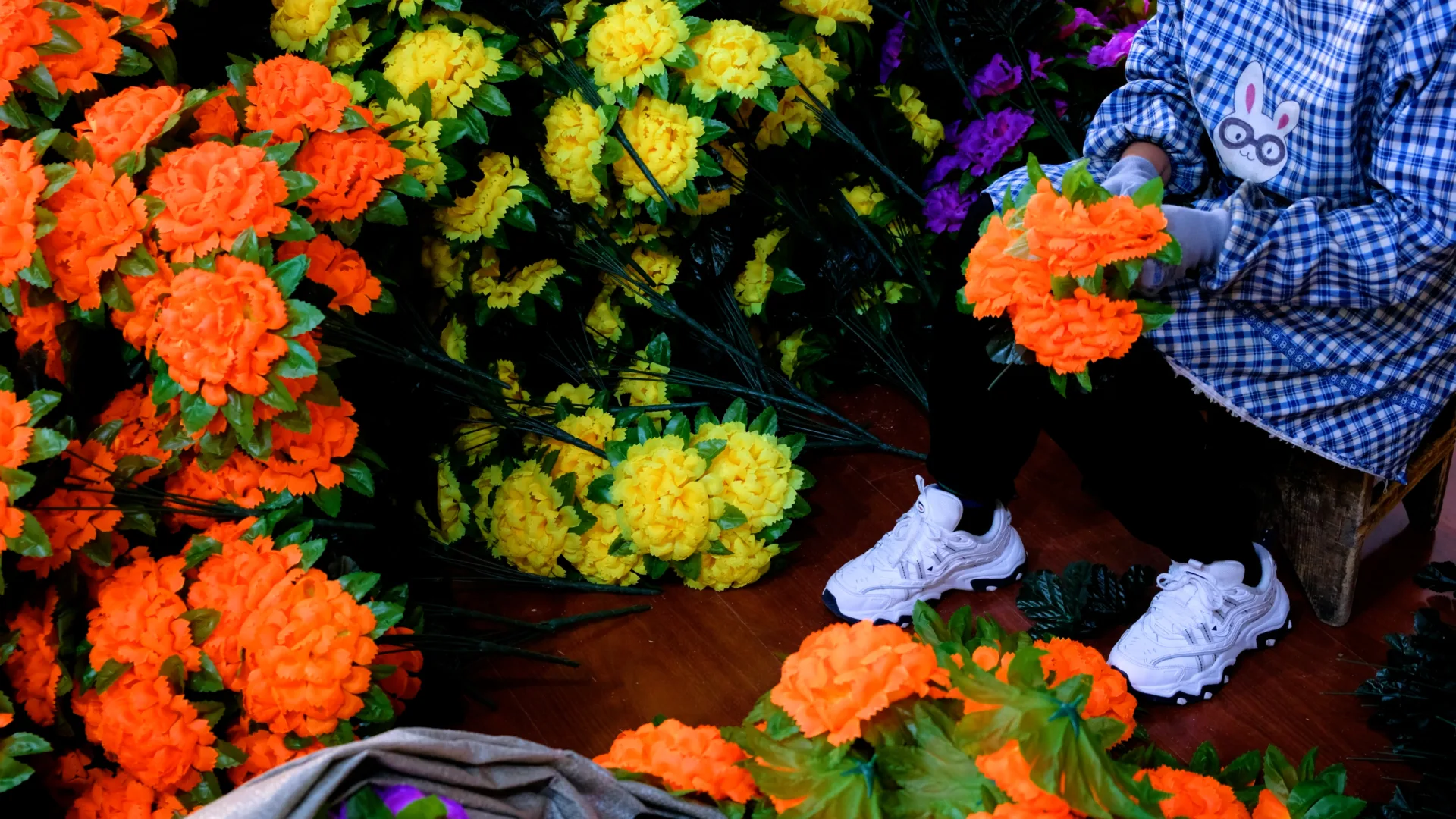
Ida Kammerloch, MADE IN CHINA, 2025 (Videostill)
Ida Kammerloch
The exhibition focuses on logistics, supply chains and global commodity flows. The starting point is the so-called ‘Belt and Road Initiative’, an intercontinental infrastructure project that China has been rolling out worldwide since 2013. It is also known as the ‘One Belt One Road’ initiative or the ‘New Silk Road’. Duisburg and the Ruhr region are located at one end of it.
Together with 23 artists from 16 countries, we journey along this new infrastructure of the global economy, which significantly shapes our lives without us really noticing it. The exhibition tells of the deserts traversed, the borders crossed, the jobs lost and gained, the containers unloaded. The scenography uses basic components of the global logistics chain, namely, glass transport racks and Monobloc chairs, the world’s best-selling piece of furniture, which is (of course) manufactured in China. Globalisation is not abstract. It’s out there on the roads and tracks.
The exhibition INDUSTRIAL: Silk Roads 3000 has a double title. Silk Roads 3000 sounds like science fiction — an exotic place in the distant future. The Silk Roads never truly disappeared; they have simply changed in shape, scale and speed. Caravans no longer cross the deserts of Central Asia laden with precious silk; instead, trains, trucks and container ships carry the oil, grain, raw materials, spare parts and manufactured goods that make up our daily lives across the globe.
The exhibition is called INDUSTRIAL because this contemporary reality is both industrial and geopolitical in its reverberations, taking the form of a massive yet largely invisible logistics network.
Our journey begins in a region intimately familiar with this history: the Ruhr. In the nineteenth century, the Ruhr was the throbbing heart of the industrial world – a cradle of wealth, poverty and revolutionary thought — before collapsing in the 1970s/1980s due to the decline of coal exploitation and steel production. Today, having been transformed by culture and logistics, the Ruhr has become one of the western endpoints of these new roads on the geopolitical map.
But to follow the flows of goods on these routes is also to follow the people who make them possible. Every commodity we consume has involved gestures, labour and sometimes alienation. INDUSTRIAL: Silk Roads 3000 asks a simple yet essential question: Who makes and transports what we consume?
-
Sat
19:00 — 22:00
Ebene 6
Opening: INDUSTRIAL. Seidenstraßen 3000
Kunsthalle Dortmund opens its doors for the first time: On Friday, 11 September 2026, we celebrate the opening of the international group exhibition…
-
Sun
16:00 — 17:30
Ebene 3, Ebene 6
Curators’ tour: INDUSTRIAL. Silk roads 3000
Curators Inke Arns and Thibaut de Ruyter will offer insights into the exhibition’s development and the concepts that shaped it.The tour lasts…
-
Sun
18:00 — 00:00
Ebene 3, Ebene 6
DEW21 Museumsnacht 2026
16:00 – midnightShort guided tours from 17:00 every hour, last tour at 11.00 pm (duration: 30 minutes)Join us on an exciting journey along the “New…
-
Mon
13:00 — 14:30
Altes Hafenamt im Dortmunder Hafen
Hafenführung
From the handling of iron ore and coal to a modern logistics hub: This guided excursion through Dortmund’s port explores the history, present and…
-
Mon
11:00 — 17:00
Ebene 3
Familysunday
Map Workshop: Paths, Goods, WondersDesign your own trade and treasure map using stamps, pens and colours. Invent landscapes, towns and roads. What…
-
Sun
16:00 — 17:30
Ebene 3, Ebene 6
Curators’ tour: INDUSTRIAL. Silk roads 3000
Curators Inke Arns and Thibaut de Ruyter will offer insights into the exhibition’s development and the concepts that shaped it.The tour lasts…
-
Mon
16:00 — 17:00
Ebene 3, Ebene 6
Public Guided Tour: INDUSTRIAL. Silk Roads 3000
Every Sunday and public holiday, a public guided tour of the exhibition takes place at 4:00 pm. The tour lasts approximately 60 minutes. No…
-
Mon
16:00 — 17:00
Ebene 3, Ebene 6
Public Guided Tour: INDUSTRIAL. Silk Roads 3000
Every Sunday and public holiday, a public guided tour of the exhibition takes place at 4:00 pm. The tour lasts approximately 60 minutes. No…
-
Sun
16:00 — 17:00
Ebene 3, Ebene 6
Public Guided Tour: INDUSTRIAL. Silk Roads 3000
Jeden Sonntag und an Feiertagen findet um 16:00 Uhr eine öffentliche Führung durch die Ausstellung statt. Dauer: ca. 60 Min. Eine Anmeldung ist nicht…
-
Mon
16:00 — 17:00
Ebene 3, Ebene 6
Public Guided Tour: INDUSTRIAL. Silk Roads 3000
Every Sunday and public holiday, a public guided tour of the exhibition takes place at 4:00 pm. The tour lasts approximately 60 minutes. No…
.webp)