
-
Archive
-
Exhibition
Expanded Cinema: Film as spectacle, event and performance
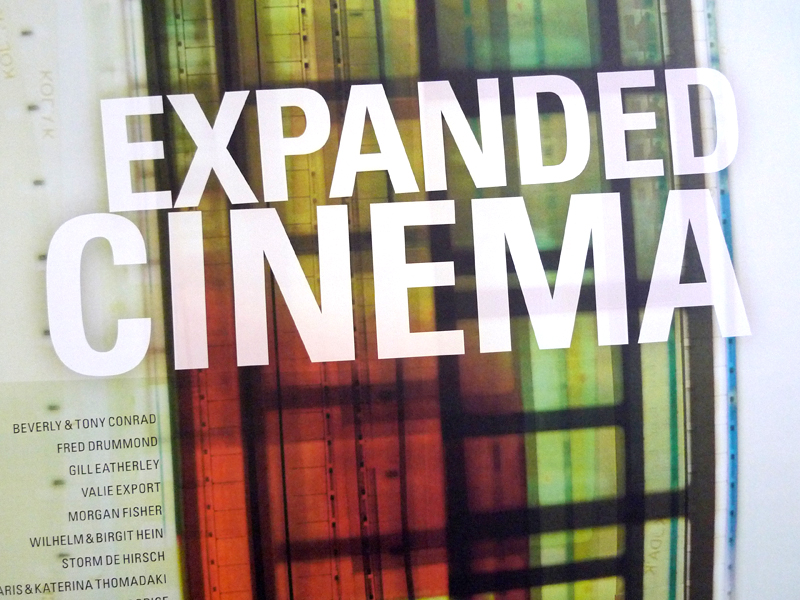
From 10–26 September, hartware medien kunst verein and medien_kunst_netz dortmund presented the programme Expanded Cinema: Film as Spectacle, Event and Performance, conceived by London-based film curator Mark Webber.
Over the course of three consecutive weekends, around forty film performances and expanded cinema events from the 1960s to the present day were presented, many of which had rarely been shown in Germany or received their German premiere in Dortmund. More than fifteen artists—including Carolee Schneemann, Anthony McCall, VALIE EXPORT, and Malcolm Le Grice—were present to perform their own works.
The programme took place at PhoenixHalle Dortmund, located on the site of the former Phoenix West steelworks in Dortmund-Hörde.
Expanded Cinema was presented in parallel with the Nam June Paik Award 2004.
Mark Webber is an independent film and video curator based in London. His recent projects include screenings and events for institutions such as the Barbican Centre, the ICA London, the National Film Theatre, Tate Modern, the International Short Film Festival Oberhausen, and the Whitney Museum of American Art. He has served as a programme advisor to the London Film Festival and recently curated Shoot Shoot Shoot: The First Decade of the London Film-Makers' Co-operative & British Avant-Garde Film 1966–76, an eight-programme series presented at eighteen international venues between 2002 and 2004.
About
Expanded Cinema refers to works that move beyond the conventional format of cinema confined to a single screen.
Rather than a movement, Expanded Cinema is a mode of presentation encompassing films and performances rooted in a wide range of aesthetic, personal, and political concerns. What unites these works is their rejection of the conventional model of projecting a single, continuous film onto one screen before a seated audience. Projectors are often placed within the same space as the audience rather than in a separate projection booth, becoming an integral part of an immersive and participatory event.
Expanded Cinema broadens the possibilities of cinematic perception. Multiple projections—presented side by side or layered upon one another—allow images to interact harmoniously, enter into dialogue, or create productive tension. Real time may be preserved, stretched, or compressed, while abstraction itself can be pushed even further.
Expanded Cinema also embraces the ephemeral nature of the medium: no two presentations are ever identical. These works frequently question the role of the spectator, and at times what unfolds within the exhibition space becomes more significant than what appears on the screen. Expanded Cinema includes film works incorporating live performance, as well as light-based works that dispense with film altogether.
In recent years, Expanded Cinema and the projected image have been the focus of three major international exhibitions: Into the Light (Whitney Museum, New York, 2001), Future Cinema (ZKM, Karlsruhe, 2002), and X-Screen (MUMOK, Vienna, 2003). Together, these exhibitions marked an important step towards situating Expanded Cinema within the history of contemporary art. Each juxtaposed works by filmmakers associated with the experimental film and film cooperative traditions alongside those of established visual artists. However, because gallery and museum exhibitions can generally present only static installations or documentary materials such as photographs and texts, they are inherently limited in conveying the vitality of Expanded Cinema as a performative and constantly evolving live event.
Expanded Cinema: Film as Spectacle, Event and Performance sought to redress this imbalance by focusing on works developed within both the experimental and more conventional traditions of filmmaking. The programme emphasised the singular, transient, and time-based nature of films and performances with a clear beginning, middle, and end, conceived as shared experiences for those present. Each work was performed only once at a fixed time. The series presented exclusively film-based works in their original formats, including multiple projections, film performances, and expanded cinema events. No video or digital technologies were used, yet the programme clearly demonstrated the profound influence these works have had on the development of new media practices and installation art in museums and galleries.